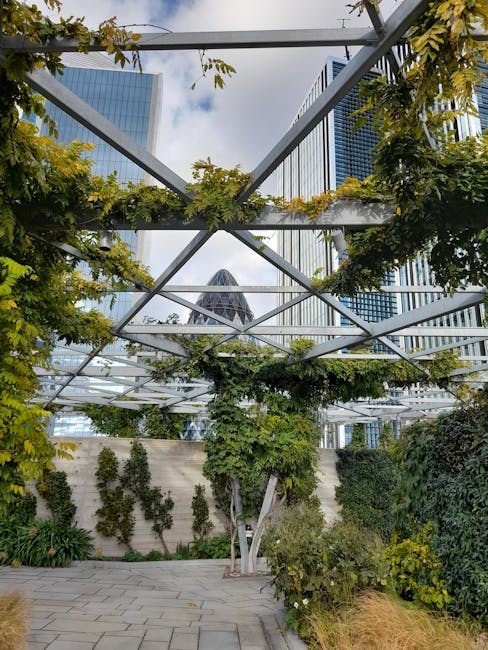
St Jamess Park roof garden irrigation for Westminster gardeners
If you manage a roof garden near St James's Park, you already know the problem: the space looks generous on a sunny day, then the wind picks up, the containers dry out fast, and everything from herbs to seasonal bedding starts looking tired by midweek. That is where St Jamess Park roof garden irrigation for Westminster gardeners becomes more than a convenience. It is the difference between a roof garden that merely survives and one that stays healthy, tidy, and genuinely enjoyable to use.
Roof gardens in central London have their own rhythm. Heat reflects off neighbouring buildings, rainfall can miss containers entirely, and access for watering is often awkward. In practice, that means gardeners need a system that is reliable, discreet, and suited to a rooftop environment rather than a ground-level border. This guide walks through how roof irrigation works, what matters most in Westminster, how to avoid common mistakes, and how to choose the right approach for a small private terrace or a larger shared roof space.
Truth be told, many roof gardens are under-watered not because people do not care, but because hand watering becomes a chore. Miss a couple of dry days in July and you notice it quickly. The leaves curl, the compost pulls away from the pot edges, and by the time you spot it, the plant has already taken a hit. A good irrigation plan removes that constant guesswork.
Table of Contents
- Why roof garden irrigation matters in Westminster
- How the irrigation system works
- Key benefits and practical advantages
- Who this is for and when it makes sense
- Step-by-step guidance
- Expert tips for better results
- Common mistakes to avoid
- Tools, resources and recommendations
- Law, compliance, standards, or best practice
- Options, methods, or comparison table
- Case study or real-world example
- Practical checklist
- Conclusion
- Frequently asked questions
Why St Jamess Park roof garden irrigation for Westminster gardeners Matters
Roof gardens around St James's Park and the wider Westminster area sit in a very particular microclimate. They are often exposed to more wind than a normal garden, but they also collect and reflect heat from masonry, paving, glass, and nearby structures. That combination can dry out plants surprisingly fast. Even on a day that feels cool at street level, the top of a building can be much harsher. If you've ever watered a planter in the morning and found it dusty and light by late afternoon, you'll know the feeling.
That is why irrigation planning matters so much here. It is not simply about convenience. It is about plant survival, consistent growth, and protecting the time and money already invested in the roof space. A well-set system helps prevent stress, which then reduces leaf drop, flowering problems, and those annoying patchy gaps that make a garden look neglected. A thirsty roof garden rarely recovers gracefully.
For Westminster gardeners, there is also a practical access issue. Roof gardens are not always easy to reach with watering cans, hoses may be limited by layout, and shared access can make frequent manual watering awkward. In a busy household or commercial setting, the job often ends up being rushed. A properly designed system gives the plants a steadier supply without turning the job into a daily scramble.
There is another angle too: roof planting tends to use containers, raised beds, and lighter-weight growing media. These dry out faster than in-ground soil. So the same sunny afternoon that barely dents a lawn can be brutal up top. That is why many experienced gardeners treat roof irrigation as essential infrastructure rather than a luxury add-on.
If you are also thinking about broader roof garden upkeep, it helps to look at the whole space as a system. Watering, pruning, clearing debris, and seasonal planting all work together. In that sense, regular garden maintenance is often the best companion to irrigation, because a healthy roof garden needs both structure and steady care.
How St Jamess Park roof garden irrigation for Westminster gardeners Works
At its simplest, roof irrigation delivers water where it is needed, in controlled amounts, on a repeatable schedule. The most suitable setup depends on the size of the garden, the planting style, and how much direct sun and wind the roof gets. There is no one-size-fits-all answer, which is a nuisance, but also a strength because the system can be tailored properly.
Most roof garden irrigation systems in central London use one of three approaches: drip irrigation, micro-sprays, or a hybrid setup. Drip irrigation sends water slowly to the root zone through tubing and emitters. Micro-sprays distribute a fine spray over a small area, which can suit mixed planters or shallow beds. A hybrid system combines both, often using drip in containers and sprays for broader planting areas. Simple enough on paper. In real life, the installation needs care.
A timer is usually the backbone of the system. It controls when the water runs and for how long. In a roof garden, timing matters because the best watering window is often early morning or later evening, when evaporation is lower and plants can absorb more before the day heats up. You can water at other times, of course, but you lose efficiency. And on a windy roof, water has a habit of going everywhere except into the pot you intended.
Pressure and water flow also matter. Roof layouts can be awkward, with long runs of hose and multiple planting zones. If the pressure is too low, the far end of the system may underperform. If it is too high, emitters can behave inconsistently or waste water. A proper design should account for the actual layout, not just the romantic idea of a rooftop paradise.
Drainage is the other half of the story. Irrigation is not only about supply; it is also about avoiding waterlogging. Rooftop planters usually rely on free-draining compost and a structure that can shed excess water safely. If the planting area holds too much moisture, roots can suffocate, and on a roof that creates avoidable mess and risk. That balance between watering and drainage is where experience really pays off.
For larger schemes or more complex outdoor layouts, it is often worth thinking about the roof garden as part of a broader landscape plan. Services such as landscape gardening can help tie irrigation into planting design, access routes, and the long-term use of the space.
Key Benefits and Practical Advantages
The biggest benefit is consistency. Plants do better when they receive water in a controlled, even way rather than in bursts of neglect and overcompensation. You see it in the foliage first: leaves stay firmer, growth remains steadier, and flowering plants are less likely to stall after a hot spell. It sounds obvious, but consistency is one of those quiet gardening advantages that makes everything else easier.
Another major benefit is time savings. Instead of carrying cans across decking or dragging a hose through narrow access routes, you can let the system do the repetitive work. That does not mean you stop checking the plants. Far from it. But it frees you from the daily grind and allows you to focus on pruning, feeding, deadheading, and looking after the garden as a whole.
There is also a visual benefit. Roof gardens are often about presentation as much as planting. Overflowing containers, dried compost, and patchy stress signs spoil the look quickly. A well-managed irrigation system helps keep the space looking polished, which is especially valuable if the garden is visible from inside the property or used for entertaining. Let's face it, no one wants to host friends on a terrace while a row of herbs looks like it has given up.
From a plant health point of view, irrigation can reduce both drought stress and the temptation to overwater. Many gardeners do both at some point: too little, then too much, then too little again. A better system smooths that out. That matters most for shallow-rooted plants, hanging containers, and newly planted stock that has not yet established a strong root network.
There is a sustainability angle too. Targeted watering reduces waste compared with broad, indiscriminate watering by hose or can. If installed properly, drip systems in particular can deliver water efficiently to the root zone with less run-off. Pair that with sensible planting choices and you end up with a garden that is easier to manage and less wasteful, which is no small thing in a city setting.
In a practical sense, irrigation also makes the garden more resilient during absences. Whether you are away for a weekend or simply too busy to water every day, a reliable system gives you breathing room. And in London, where summer weather can turn from grey to scorchingly dry in a very short space of time, that breathing room is worth quite a lot.
Who This Is For and When It Makes Sense
This kind of irrigation makes sense for anyone managing a roof garden that contains multiple pots, raised planters, or mixed ornamental planting. It is especially useful for Westminster gardeners working in exposed spots where wind and sun dry the compost quickly. If you are looking after a roof terrace near St James's Park, or a similar central London rooftop, you are squarely in the group that benefits most.
It also makes sense if the garden is used regularly but not watered every day. That might be a private home, a managed residential building, a hospitality terrace, or a small office roof garden. The more people use the space, the more valuable a repeatable watering method becomes. Nobody wants to be the person who forgot the watering round. It happens, of course. More often than people admit.
If your planting is mostly drought-tolerant succulents or tough Mediterranean herbs, you may not need a complex system. But even those plants need help during establishment and during extended dry periods. On the other hand, if your roof garden includes ferns, seasonal bedding, edible crops, or lush container displays, irrigation becomes much more important. Those plants simply drink more and sulk faster when ignored.
It also makes sense when access is awkward. Roof gardens often have narrow paths, awkward corners, or storage limitations. If carrying water becomes a hassle, the job gets skipped. A well-planned system reduces friction. That might sound like a small thing, but in gardening, small friction points are often what makes a maintenance routine collapse.
If the space is being refreshed from scratch, this is a good time to think about adjacent tasks too. Clearing out tired planting, resetting beds, and improving layout can make irrigation more effective. In some cases, a tidy start is half the battle, which is why garden clearance can be a useful first step before installation or replanting.
Step-by-Step Guidance
A good roof irrigation project starts with observation. Before any tubing or timer is fitted, spend time understanding how the garden behaves. Where does the sun land first? Which planters dry out fastest? Are there low spots that hold water, or exposed corners that get blasted by wind? A few days of watching carefully can save a lot of trial and error later.
- Map the planting zones. Group containers and beds by water need. Herbs, bedding plants, shrubs, and feature plants often need different treatment. This step sounds basic, but it is the bit people skip most often.
- Check the access and route. Think about where pipes or lines can run safely without creating trip hazards or spoiling the look of the space. On a roof, neat routing matters.
- Assess water pressure and source. The system needs to match the available supply. Weak pressure, long runs, or many outlets can all affect performance.
- Choose the right method. For most containers, drip irrigation is the starting point. For broader planters or mixed displays, micro-sprays may be better. A hybrid setup can be ideal if the garden has varied planting.
- Install a timer and test the schedule. Begin with short cycles and check how evenly the water reaches the plants. Then adjust.
- Monitor for a few weeks. Look for signs of overwatering or underwatering. Wet compost, drooping leaves, dry patches, and runoff all tell a story.
- Fine-tune through the seasons. What works in April may not work in July. Roof gardens need seasonal adjustment, not a fixed set-and-forget attitude.
That last point matters more than people expect. A spring schedule can be too generous by high summer, and a summer setting may not suit cooler, wetter weeks. The system should serve the garden, not the other way round. Simple, but easy to forget.
If the roof garden also contains turf or a lawned area, the watering strategy will differ again. Turf wants more even coverage and careful timing, while containers need more precise root-zone watering. For spaces with grassed sections, lawn mowing is only one part of care; the underlying watering pattern has to match the plant material as well.
Expert Tips for Better Results
Use mulching where appropriate. A layer of bark, composted material, or decorative mulch on top of the pot can reduce evaporation and help the soil hold moisture for longer. On a roof garden, where wind strips moisture faster than you might think, this is often a smart move. It is a simple trick, but a good one.
Group plants by thirst. If you put a drought-loving rosemary next to a thirsty fern and treat them the same, one of them will be unhappy. Most likely both, to be fair. A better layout means more efficient irrigation and fewer compromises. This is one of those quietly expert decisions that makes a garden feel easy to maintain.
Check emitters and filters regularly. Tiny blockages can build up over time, especially where water quality or debris is an issue. In a rooftop setting, a partially blocked emitter can cause a patch of plants to suffer while the rest seem fine. That unevenness can be sneaky. By the time you notice, the weakest plants have already been under stress for days.
Water early in the day when you can. Morning watering gives plants time to absorb moisture before the hottest part of the day and reduces evaporation loss. Evening can work too, especially in summer, but morning usually gives the cleanest result. There is a reason experienced gardeners often stick to the same early slot. It just works.
Don't ignore the container mix. Good irrigation is only half the equation if the growing medium is poor. Light, free-draining compost is usually better for roof containers, but it should still retain enough moisture to keep the root zone stable. Too sandy and it dries out too quickly; too heavy and it stays wet for too long. A bit of judgement is needed here, not just a bag-and-go approach.
Plan for seasonal changes. In spring, new growth may need gentler watering. In midsummer, the same plants may need more frequent irrigation. In autumn, rainfall may reduce the need. If winter planting is present, you still need to check for dry spells because cold air does not always mean damp compost. Roofs can be oddly drying even in the colder months.
If your roof garden sits within a larger outdoor design, it can help to think beyond watering alone. Structural planting, screening, and hard surfaces all influence how the garden behaves. For example, if privacy planting or tall container arrangements are part of the design, a good setup should support them from day one. Our experience is that people often plan the pretty bits first. Fair enough. But the practical bits keep the pretty bits alive.
Common Mistakes to Avoid
The most common mistake is treating a roof garden like a normal garden at ground level. It isn't. Wind exposure, limited soil volume, and heat reflection make it behave differently. If you apply the same watering schedule used for a suburban border, expect problems. The plants will let you know, eventually. Usually by looking miserable.
Another mistake is overwatering because the system exists. Automatic irrigation can lull people into thinking the job is done. But a timer is not a brain. It cannot tell if there has been a wet week, a blocked emitter, or a plant that has outgrown its pot. You still need to inspect, adjust, and think.
Some gardeners also try to water too many different plant types with one simple setup. That can work for a very uniform planting scheme, but it gets messy fast in mixed roof gardens. Different plants have different demands. One schedule for everything often means compromise, and not the good kind.
Neatness matters too. Tubing that is left exposed, twisted, or poorly fixed can become a trip hazard and an eyesore. On a roof terrace, where the space is often used socially, that matters more than people realise. A tidy installation feels more professional and lasts better, because it is less likely to be accidentally damaged.
Ignoring drainage is another big one. If water is delivered efficiently but excess water cannot escape, roots can rot. That may sound obvious, but on roof gardens where containers are often close together and soil depths are shallow, it happens more than you'd expect. Good irrigation and good drainage have to work in tandem.
Finally, do not forget winter readiness. Hoses, timers, and exposed fittings can suffer in cold weather if they are not prepared correctly. A little off-season care helps avoid cracked fittings, leaks, and spring headaches. Nobody wants to return after the holidays to find a frozen, split pipe. That is not a nice surprise.
Tools, Resources and Recommendations
The right tools depend on the size of the garden, but a practical roof irrigation kit usually includes a timer, mainline tubing, feeder lines, emitters or drip lines, connectors, filters, and a pressure regulator where needed. For mixed planting, it is worth choosing components that can be adjusted rather than fixed too rigidly. Flexibility makes future changes far easier.
A moisture meter can be helpful, especially if you are still learning how your roof garden behaves. It gives a quick sense of whether the compost is genuinely dry or just looks dry on the surface. Surface appearance can mislead you, especially in windy conditions. The top inch may look parched while the root zone is still perfectly fine.
Good-handled pruners, a watering wand, and a lightweight hose can still be useful as backup tools. A roof system should reduce manual effort, not eliminate all human involvement. You will still need to prune, deadhead, inspect, and occasionally give a specific plant some direct attention. Gardens are living things, after all. They have opinions.
For ongoing upkeep, a broader maintenance plan helps keep the whole space in balance. That may include seasonal feeding, container refreshes, minor replanting, and general tidy-up work. If the roof garden is part of a larger property, you may also want to think about complementary services such as services overview information before committing to a long-term schedule, so everything fits together properly.
It is also worth choosing materials with longevity in mind. Cheap fittings can be false economy if they fail under sun exposure or regular movement. In a rooftop environment, UV exposure and access wear are not trivial. A slightly better-quality fitting can save repeated call-outs and frustration later on.
Law, Compliance, Standards, or Best Practice
For a roof garden in Westminster, compliance is mostly about sensible best practice, safe installation, and protecting the building fabric. This is not a space for guesswork. Any irrigation setup should be installed in a way that avoids leaks, excess run-off, and damage to waterproof membranes or drainage points. If you are not sure about the condition of the roof structure or waterproofing layer, that needs checking before work begins.
Where water supply is involved, good plumbing practice matters. The system should be fitted responsibly, with appropriate fittings and backflow protection if required by the installation setup. You should not improvise this bit. A rooftop leak can become a much larger problem than a garden issue very quickly, and nobody wants moisture sneaking where it should not.
It is also sensible to follow health and safety best practice during installation and maintenance. Roof access, trip hazards, electrical components, wet surfaces, and working near edges all need proper care. If the space is shared or managed, there may be site-specific procedures or building rules to follow. A reliable contractor should talk through these openly rather than breezing past them.
Waste handling and material disposal matter too. Old tubing, failed parts, and plant waste should be dealt with properly. In central London, people are rightly alert to responsible maintenance and tidy working practices. It sounds boring, but boring is good when water, height, and property are involved.
For peace of mind, many property owners prefer to work with a team that takes these issues seriously from the start. You can review the company's approach to safety and working standards on the health and safety policy and insurance and safety pages, especially if the roof garden is in regular use or part of a managed property.
Options, Methods, or Comparison Table
Different roof gardens need different irrigation methods. A compact terrace with pots does not need the same setup as a larger planted roof with mixed beds and feature shrubs. The table below gives a practical comparison so you can see what usually suits each situation.
| Method | Best for | Strengths | Limitations |
|---|---|---|---|
| Drip irrigation | Containers, raised beds, targeted root watering | Efficient, discreet, reduced water waste | Needs good layout and regular checks |
| Micro-sprays | Mixed beds, wider planting pockets, softer coverage | Good coverage, useful for varied planting | More evaporation and wind drift on exposed roofs |
| Hybrid system | Mixed roof gardens with different plant types | Flexible, adaptable, handles varied needs | More planning and setup time required |
| Manual watering only | Very small gardens or occasional use | Simple, low upfront setup | Labour-heavy, easy to miss, less consistent |
In a Westminster roof garden, drip irrigation is often the starting point because it is efficient and tidy. But if the space contains flowering displays, wide planters, and edible crops, a hybrid approach can be the better investment. The right answer depends on how the space is used day to day, not just on what looks neat in a brochure.
As a rule, if you are tending a decorative rooftop with regular visitors, consistency and appearance may matter most. If the space is more horticultural and plant-heavy, flexibility and coverage become more important. There is no perfect system in the abstract. There is only the system that matches the job.
Case Study or Real-World Example
Consider a modest roof terrace near St James's Park with a mix of planters, herbs, and a few flowering containers. The owner enjoys using the space, but by late spring the rosemary looks fine while the hydrangea and bedding plants begin to struggle after warm spells. Watering by hand had been happening in bursts: plenty on weekends, little during the week, and too much after a hot afternoon panic. Classic, really.
The solution was not a dramatic redesign. It was a sensible irrigation layout divided into zones. The herbs received a lighter schedule. The thirstier containers were given more frequent but smaller doses. A timer was fitted, the lines were kept neat, and the owner was shown how to inspect the system every couple of weeks. Nothing flashy. Just practical.
Within a short period, the garden began to look more even. Plants held their colour better, and the compost no longer alternated between dust-dry and saturated. The owner also noticed that maintenance felt less urgent. That is often the hidden benefit: less drama. The garden stops demanding attention every other day and starts behaving like a place you can actually enjoy.
If the same terrace were being redesigned today, the planting would probably be grouped even more carefully, and the irrigation would be planned alongside the layout from day one. That is the ideal. But even an existing roof garden can usually be improved a great deal with a thoughtful adjustment rather than a full overhaul. Small changes, big difference. You see that a lot in rooftop work.
Practical Checklist
Use this checklist before and after installing roof garden irrigation. It keeps the process grounded and helps avoid the common oversights.
- Confirm the roof structure and waterproofing are suitable for garden use.
- Map the sunny, windy, and shaded areas of the roof.
- Group plants by water needs wherever possible.
- Choose drip, spray, or hybrid irrigation based on planting style.
- Make sure the water supply and pressure are adequate.
- Install a timer that can be adjusted seasonally.
- Check that drainage is clear and planters are not waterlogged.
- Keep hoses and tubing tidy, secure, and out of walkways.
- Inspect emitters and filters regularly for blockages.
- Review the setup after the first few weeks and make small corrections.
- Prepare the system for colder weather when needed.
- Keep a simple maintenance log, even if it is just a note on your phone.
That last point sounds almost too basic to matter, but it helps. A quick note about what changed after a heatwave or a wet spell can save a lot of guessing next month. Your future self will thank you. Probably quietly, but still.
Conclusion
St Jamess Park roof garden irrigation for Westminster gardeners is really about protecting the health, beauty, and usability of a rooftop space that faces more stress than a ground-level garden ever will. With the right method, you can reduce waste, improve plant performance, and make upkeep far less chaotic. More importantly, you create a garden that feels calm and cared for, even in the middle of a busy London week.
The best systems are not the most complicated ones. They are the ones that fit the planting, the building, and the way the garden is actually used. Start with the site, choose the method with care, and keep an eye on it through the seasons. Do that, and the roof garden will repay you with steadier growth and a lot fewer surprises.
If you are planning a refresh, tightening up maintenance, or simply want a more dependable watering setup, now is the right time to act. A little planning at the start can save a great deal of frustration later, and honestly, gardens usually reward the people who pay attention before things go wrong.
Get a free quote today and see how much you can save.
Frequently Asked Questions
What is the best irrigation system for a roof garden in Westminster?
For most roof gardens, drip irrigation is the most efficient starting point because it delivers water directly to the root zone and reduces waste. If your planting is mixed, a hybrid system can work better. The right choice depends on container size, exposure, and how varied the planting is.
How often should a roof garden be watered?
There is no fixed schedule that suits every roof garden. In warm, windy weather, containers may need water more often than ground-level beds. The safest approach is to check the planting regularly and adjust the timer seasonally rather than leaving the same setting all year.
Can I use a normal garden hose on a roof terrace?
You can, but it is often awkward and less consistent. A hose may be fine as a backup tool, but for regular care a fitted irrigation system is usually more practical and tidy. It also makes it easier to water evenly across the whole space.
Does a roof garden need drainage as well as irrigation?
Yes. Good irrigation is only half the story. Roof gardens need effective drainage so excess water does not sit in planters or stress roots. If water has nowhere safe to go, you can end up with soggy compost and unhappy plants.
What plants benefit most from roof irrigation?
Thirstier plants such as bedding displays, herbs in containers, ferns, and new plantings benefit most. Even drought-tolerant plants usually need support when they are first established or during prolonged dry periods. Roof conditions are harder than many people expect.
Is automatic irrigation expensive to run?
The running cost is usually modest compared with the value of the plants and the time saved. Efficient systems such as drip irrigation can reduce unnecessary water use. The bigger cost is often installation and correct setup, which is why planning matters.
How do I stop irrigation lines from looking messy?
Good routing and fixing make a big difference. Lines should be kept neat, tucked out of the main walkways, and matched to the layout of the garden. In a well-designed roof space, irrigation should be easy to forget because it blends in so well.
Do I need professional help to install roof garden irrigation?
For a very small terrace, a simple system might be manageable. But in most roof gardens, professional planning is sensible because pressure, drainage, access, and roof safety all matter. A poorly installed system can create more trouble than it solves.
How do I know if my roof garden is being overwatered?
Look for persistently wet compost, yellowing leaves, weak growth, or water pooling in containers. Overwatering can be subtle at first, especially if plants still look green. Checking the root zone is more reliable than judging only by the surface.
What maintenance does an irrigation system need?
Regular checks are important. Inspect filters, emitters, connectors, and timer settings every so often, and review the schedule after seasonal weather changes. A small amount of routine attention keeps the system efficient and prevents hidden problems from building up.
Can irrigation help with privacy planting or tall containers?
Yes, especially where taller containers and screening plants need steady moisture to stay healthy. If you are using the roof to create a more private space, a consistent watering system helps those structural plants establish and remain full. It is one of those details that quietly supports the whole design.
What should I do before installing irrigation on an existing roof garden?
Start by checking the roof condition, reviewing plant needs, and mapping the access points and watering zones. It also helps to clear out tired planting and make sure drainage is working properly. A little preparation makes the installation much smoother and the results better from the start.
For gardeners in Westminster, a roof garden should feel like a calm place above the noise, not another job waiting to be done. Get the watering right, and the whole space starts to breathe a little easier.